There's no single "CRS/FATCA deadline." An individual taxpayer in Ohio, a retiree in Lisbon, and a bank in Singapore are all working against different dates in 2026 — and missing any of them can trigger automatic penalties or an IRS audit, even without a hint of intentional tax evasion.
This article breaks down the 2026 deadlines by filer type, walks through what happens when one slips past, and outlines how to stay ahead of the calendar before it becomes a problem.
Key Takeaways
- Form 8938 is due April 15, 2026 (June 15 abroad; October 15 with Form 4868).
- FFI CRS/FATCA deadlines mostly fall April–August 2026, with a July 1 Responsible Officer certification.
- Missed Form 8938 starts at $10,000 and can reach $60,000, plus a 40% accuracy-related penalty.
- Track thresholds and gather statements year-round instead of scrambling each April.
- A cross-border tax pro can map overlapping deadlines and close prior-year gaps.
Why CRS and FATCA Deadlines Still Matter in 2026
The old assumption that foreign accounts stay invisible to the IRS hasn't been true for years, and it's even less true now. Under CRS and FATCA, foreign banks and financial institutions report account data directly to their home tax authority, which then exchanges it with the IRS and dozens of partner countries.
If you hold a foreign account, someone is already telling the IRS about it. The only open question is whether your own filing matches what they reported.
That gap between what's reported and what's filed is exactly what triggers enforcement action.
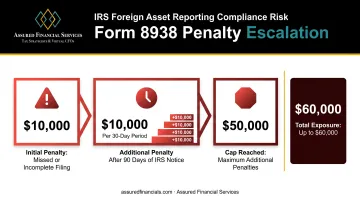
The penalty structure for missing Form 8938 is steep and automatic:
- A $10,000 penalty applies for each tax year the form isn't filed or is missing required information.
- If the failure continues more than 90 days after IRS notice, an additional $10,000 applies per 30-day period, capped at $50,000 in additional penalties.
- That means a single missed filing year can cost up to $60,000 before any tax is even assessed, according to the IRS Internal Revenue Manual on international penalties.
Beyond the dollar figure, non-compliance extends how long the IRS can come after you. Omitting more than $5,000 of gross income tied to a reportable foreign asset opens a six-year assessment window instead of the usual three.
If required Form 8938 information is never provided, the assessment period stays open until three years after that information is eventually filed. The clock might not even start running.
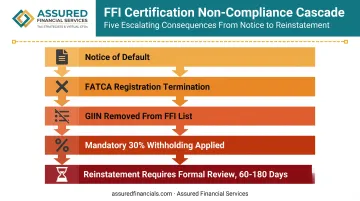
For financial institutions, the stakes are operational as much as monetary. Missing a required FATCA certification can lead to a notice of default, termination of FATCA registration, and removal of the institution's GIIN from the published FFI List. That can disrupt correspondent banking relationships that took years to build.
2026 FATCA and CRS Reporting Deadlines by Filer Type
"The FATCA deadline" is a misleading phrase. There isn't one. Whether you're filing as an individual, an expat, or a financial institution changes both the due date and the extension rules that apply to you.
Individual U.S. Taxpayers (Form 8938)
For U.S. residents, Form 8938 rides along with your regular income tax return. The standard deadline is April 15, 2026, filed as an attachment to Form 1040.
You only need to file if your specified foreign financial assets exceed these thresholds:
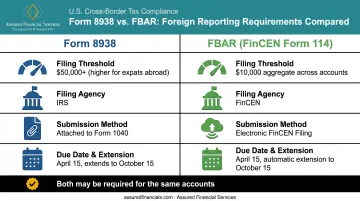
- Single or married filing separately: more than $50,000 at year-end, or more than $75,000 at any point during the year
- Married filing jointly: more than $100,000 at year-end, or more than $150,000 at any point during the year
If you file Form 4868 by April 15, your filing deadline pushes to October 15, 2026 — but that extension only applies to paperwork, not payment. Any tax owed is still due April 15, and interest accrues on the balance from that date regardless of when you actually file.
U.S. Expats and Foreign Nationals
Living outside the U.S. means extra time and higher thresholds. If your tax home and main place of business sit outside the United States and Puerto Rico, you get an automatic two-month extension to June 15, 2026 — no form required, just an eligibility statement attached to your return.
The asset thresholds for taxpayers abroad are also considerably higher:
- Single or married filing separately: more than $200,000 at year-end, or more than $300,000 at any point during the year
- Married filing jointly: more than $400,000 at year-end, or more than $600,000 at any point during the year
These figures, along with the domestic thresholds above, come directly from the IRS comparison of Form 8938 and FBAR requirements.
Here's where people get tripped up: FBAR (FinCEN Form 114) is a separate filing with its own $10,000 aggregate threshold, its own April 15 due date, and its own automatic extension to October 15. It's filed electronically through FinCEN, not with your tax return.
Many filers need to submit both Form 8938 and FBAR for the exact same foreign accounts. They are not interchangeable, and filing one does not satisfy the other.
Foreign Financial Institutions (FFIs) and CRS Reporting
FFI reporting deadlines are set by each jurisdiction's tax authority, not by the IRS or OECD directly. Here's how several key jurisdictions shape up for 2026:
| Jurisdiction | 2026 CRS/FATCA Deadline |
|---|---|
| Canada | May 1, 2026 |
| United Kingdom | May 31, 2026 |
| Singapore | May 31, 2026 |
| India | May 31, 2026 |
| France | July 15, 2026 |
| Cayman Islands | July 31, 2026 |
| Germany | July 31, 2026 |
| Mexico | August 31, 2026 |
Most tax authorities, including Canada's CRA, move a deadline falling on a weekend or public holiday to the next business day — worth confirming directly with the relevant authority if your reporting date lands close to a weekend.
There's also a deadline that has nothing to do with the calendar year's data: the FATCA Responsible Officer certification, due July 1, 2026. It covers both preexisting-account certifications and periodic certifications spanning three-year cycles.
Skipping it doesn't just generate a notice. Per the IRS overview of the FATCA certification process, it can eventually lead to registration termination and GIIN removal. The IRS process does include cure notices and a remediation window before that happens.
What Happens If You Miss a CRS or FATCA Deadline
Missing a deadline sets off a predictable chain of consequences. On the FATCA side, none of them require the IRS to prove you intended to hide anything.
For individual filers, the financial hit builds in stages:
- Initial penalty: $10,000 for the missed or incomplete Form 8938.
- Continuation penalty: an additional $10,000 for each 30-day period after 90 days of IRS notification, capped at $50,000.
- Accuracy-related penalty: a 40% penalty on any underpayment tied to the undisclosed foreign asset, on top of the filing penalties above.
- Extended audit exposure: a six-year statute of limitations when omitted income tied to the asset exceeds $5,000, instead of the standard three years.
That combination of filing penalty, accuracy penalty, and a longer audit window is what turns a paperwork miss into a genuinely expensive problem.
CRS penalties depend on the reporting jurisdiction. Local rules may include monetary fines, account restrictions, or criminal exposure. Amounts and enforcement posture vary widely by country.
For FFIs, the consequences hit differently. A missed certification or reporting deadline can trigger:
- A notice of default from the IRS
- Termination of FATCA registration if the default isn't cured
- Removal of the GIIN from the published FFI List
- Mandatory 30% withholding on certain U.S.-source payments once nonparticipating status applies
- Reinstatement only after a formal request, all missing certifications, and a remediation plan (IRS review: 60 to 180 days)
If you've already missed a deadline, the path forward depends heavily on why it happened. Someone who simply forgot has different options than someone who's known about unreported accounts for years.
Reasonable-cause arguments, streamlined filing compliance procedures, and voluntary disclosure programs all exist. They apply to different fact patterns and carry different risk profiles.
An IRS Enrolled Agent can represent you directly in that process. At Assured Financial Services, the firm's EA credential carries unlimited practice rights before the IRS, so correspondence, audits, and appeals stay in-house rather than getting referred out.
Before recommending a path, the team reviews IRS transcripts, notices, and filing history. That review identifies which remediation option fits the situation instead of defaulting to the same program for every client.
Best Practices for Meeting 2026 CRS and FATCA Deadlines
Most late filings aren't caused by ignorance of the rules. They happen when details go untracked until it's too late to react. A few habits fix that:
- Build a deadline map, not a single date. List every applicable filing—Form 8938, FBAR, any FFI/CRS obligation, and certification deadlines—plus each extended date. One calendar entry per form beats relying on memory in April.
- Track thresholds all year, not at filing time. Foreign asset values move. Monthly or quarterly snapshots beat reconstructing twelve months of statements under tax-season pressure.
- Bring in a cross-border specialist before the deadline. Overlapping dates, Form 8938 vs. FBAR threshold mismatches, and jurisdiction-specific CRS rules are hard to juggle alone across multiple countries and account types.
Assured Financial Services structures cross-border work around year-round monitoring rather than a once-a-year scramble—so threshold changes and looming deadlines surface before they turn into penalty notices.
Conclusion
There's no single "CRS/FATCA deadline." The actual date depends on whether you're an individual taxpayer, an expat, or a financial institution, and which country's rules apply to your accounts.
What separates a routine filing from a $10,000-plus penalty notice is almost always preparation: knowing your thresholds, tracking your accounts, and marking every applicable date well before it arrives.
Heading into the 2026 cycle with this many moving parts, professional guidance is what keeps multi-jurisdiction compliance from becoming a multi-year headache.
Frequently Asked Questions
When is the FATCA filing deadline?
Form 8938 is due with your federal tax return on April 15, 2026. Taxpayers living abroad get an automatic extension to June 15, and filing Form 4868 pushes the deadline to October 15.
Who needs to report under FATCA?
U.S. individual taxpayers, certain expats, and specified entities holding foreign financial assets above the IRS thresholds must file Form 8938. Thresholds vary based on filing status and U.S. residency.
What happens if I don't file FATCA?
You face a minimum $10,000 penalty, rising to $60,000 for continued non-compliance, plus a possible 40% accuracy penalty on related unreported income. The statute of limitations can also extend to six years.
What is the difference between FATCA and CRS?
FATCA is U.S. legislation requiring foreign institutions to report U.S. account holders to the IRS, backed by withholding penalties. CRS is a global, multilateral OECD standard for automatic exchange of financial account information among participating countries.
Do I need to file both FBAR and FATCA?
Yes, potentially. FBAR (FinCEN Form 114) and FATCA (Form 8938) are separate filings with different thresholds and forms, and the same foreign accounts can trigger both requirements simultaneously.
What is the FATCA certification deadline for foreign financial institutions in 2026?
The Responsible Officer certification deadline is July 1, 2026, covering preexisting-account and periodic certifications. Missing it can lead to GIIN revocation and removal from the FFI List.