
Here's some context that might calm your nerves: the IRS's own 2025 Data Book reports just 0.1% examination coverage for individual income tax returns filed for tax year 2023 — and that figure is still climbing as the IRS finishes processing cases within the standard three-year window (IRS Publication 55-B). Audits are rare. But when your number comes up, most taxpayers have no idea who's legally allowed to speak to the IRS on their behalf, what the process actually looks like, or whether being selected means they've done something wrong.
This guide breaks down what a tax audit accountant does, how the IRS audit process unfolds step by step, the warning signs that mean you need representation now, and how to pick the right professional for the job.
Key Takeaways
- A tax audit accountant is an Enrolled Agent, CPA, or tax attorney authorized under IRS Circular 230 to represent you in an audit.
- An audit notice does not mean you did something wrong; many audits close with no changes.
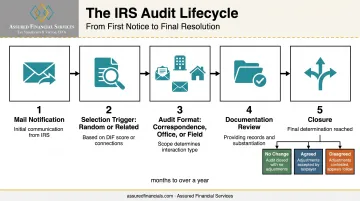
- Audits run by mail, office, or field visit and can last a few months to more than a year.
- Enrolled Agents have unlimited nationwide practice rights before the IRS, so they can handle full audit representation.
What Is a Tax Audit Accountant?
A tax audit accountant isn't the same as the person who filed your return or reconciled your books last quarter. It's a professional legally authorized to communicate with, and appear before, the IRS on your behalf during an examination.
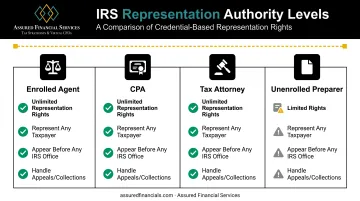
That authorization matters more than most taxpayers realize. Under IRS Circular 230, only three types of practitioners hold "unlimited representation rights": the ability to represent any taxpayer on any tax matter before any IRS office:
- Enrolled Agents (EAs)
- Certified Public Accountants (CPAs)
- Tax attorneys
Unenrolled preparers (for example, someone at a seasonal tax shop) have only limited rights. They can represent you before certain IRS employees, but only for a return they personally prepared and signed, and never in Appeals or collections (IRS credential guidance).
The Enrolled Agent Credential
The Enrolled Agent (EA) designation is the highest credential the IRS itself awards. It's a federal license issued by the U.S. Department of the Treasury, earned by passing a three-part IRS exam covering individual returns, business returns, and representation procedure, or through qualifying prior IRS experience.
EAs must also complete 72 hours of continuing education every three years to keep the credential active (IRS Enrolled Agent information).
What an Audit Representative Actually Does
Once you bring in a qualified representative, their job includes:
- Reviewing and organizing your financial records before the examiner sees them
- Communicating directly with the IRS examiner, so you don't have to
- Negotiating adjustments, penalties, or payment terms
- Protecting your rights throughout the process
Once you sign IRS Form 2848 (Power of Attorney), your representative takes over communication entirely. In most cases, you never need to speak to the IRS directly again.
What Happens During an IRS Tax Audit?
Every audit feels chaotic when you're the one in it. The process itself still follows a clear structure.
How the IRS Makes Contact
The IRS only initiates an audit by mail. It never starts an audit with a phone call, text, or email (IRS audit procedures). If you get an unexpected call or message demanding immediate payment or personal information, that's a scam. Legitimate follow-up calls only happen after the IRS has already contacted you in writing.
Why Returns Get Selected
Two main triggers drive audit selection:
- Random statistical screening: your return gets compared against a computer-generated formula based on statistical norms for similar returns.
- Related examinations: your return gets pulled in because it involves a business partner, investor, or transaction connected to someone else already under audit.
The Three Audit Formats
| Audit type | What it involves | Where it happens |
|---|---|---|
| Correspondence | Conducted entirely through the mail | No in-person meeting |
| Office audit | Interview-style review of specific issues | An IRS office |
| Field audit | Comprehensive, in-depth examination | Your home, business, or representative's office |
Recordkeeping Rules
Keep supporting documents for at least three years from filing, the standard assessment window. The IRS can reach back further—generally up to six years—if unreported income exceeds 25% of your gross income or unreported foreign-asset income tops $5,000 (IRS Topic 305).
How Long Does It Take?
The IRS sets no fixed timeline. Duration depends on audit type, issue complexity, and how quickly you produce documentation. A straightforward correspondence audit might wrap up in a few months. A complex field audit spanning multiple tax years can stretch well past a year.
How Audits End
Every audit closes one of three ways:
- No change: your records substantiate the return, nothing changes.
- Agreed: the IRS proposes changes, you accept them.
- Disagreed: the IRS proposes changes, you dispute them.
If you disagree, you can request a manager conference, mediation through Fast Track Settlement, or a formal appeal, as long as time remains on the statute of limitations.
Do You Need a Tax Audit Accountant? Risk Signals to Watch For
Am I in Trouble If I Get Audited?
Not necessarily. A lot of audit selections come down to a statistical formula flagging your return against typical patterns for similar filers; it's not an accusation.
The data backs this up. In fiscal year 2021, individual no-change rates ranged from 11.5% to 37.6% depending on income level, according to the GAO (GAO-22-104960). In plain terms: plenty of audited taxpayers walk away with nothing owed.
What actually raises your risk during an audit:
- Unreported income, especially income the IRS already has on file from 1099s or W-2s
- Aggressive or undocumented deductions
- Inconsistent records between what you claimed and what you can prove
Simple math errors or honest mistakes rarely escalate. Outcomes range from no change, to owing back tax plus interest, to penalties for negligence. Criminal referral is rare and reserved almost exclusively for intentional, provable fraud.
Signs You Should Bring in Professional Representation
Certain situations call for a tax audit accountant right away, rather than trying to handle it yourself:
- You've received an IRS or state notice of any kind
- Your return involves multiple income streams, cross-border income, FBAR/FATCA issues, or government contract revenue
- You hold cost-type or DCAA-sensitive contracts and lack clean job-cost support
- You can't fully substantiate the deductions you claimed
- You're unsure what the examiner is actually asking for
Self-representation carries a hidden risk: taxpayers often over-share information or unknowingly waive rights they didn't know they had. A casual question from the examiner can open issues that were never part of the original audit scope.
The best time to bring in representation is before you respond to the first notice, not after the situation has already escalated.
Why Work With an IRS Enrolled Agent for Audit Representation
Unlike CPA licenses, which are issued and regulated at the state level, the EA credential is federal. It carries the same unlimited representation rights in all 50 states — a real advantage if you've moved, have multi-state income, or work with clients across jurisdictions.
Assured Financial Services (AFS) was founded and is personally led by an IRS Enrolled Agent with more than 15 years of combined experience in corporate accounting and federal government contracting finance. Every engagement runs directly through the founder, not a rotating cast of junior staff.
That same principal-led model applies before an audit notice ever arrives. AFS's year-round strategy work includes:
- Entity structure analysis for tax efficiency
- Income and deduction timing decisions ahead of deadlines
- Quarterly estimated tax filings
- Ongoing FBAR, FATCA, and cross-border compliance monitoring
- Compliant accounting systems and audit-readiness support for government contractors
That last point matters because AFS specializes in cases many general accountants lack the depth to handle:
- GovCon contractors managing DCAA compliance, indirect rate structures, and job costing
- Cross-border and international filers with FBAR (FinCEN Form 114) and FATCA (Form 8938) obligations
- High-income individuals juggling multiple income streams, real estate holdings, or business ownership
If you're already facing an audit or a back-tax issue, AFS provides IRS representation and tax resolution services for correspondence, office, and field audits, plus appeals. There is no minimum engagement required just to start a conversation.

How to Choose the Right Tax Audit Accountant
Not every "tax professional" can legally represent you before the IRS. Before hiring anyone, run through this checklist:
- Verify the credential. Confirm they're an Enrolled Agent, CPA, or tax attorney, and ask them to confirm in writing.
- Confirm they'll sign Form 2848. If a firm won't file a Power of Attorney, they can't represent you directly.
- Ask about relevant experience. Have they handled cases like yours — GovCon compliance, cross-border reporting, multi-year back taxes?
- Clarify their communication process. Will you get updates after every IRS contact, or radio silence until it's resolved?
Watch for these red flags:
- Guaranteed outcomes. No legitimate representative can promise a specific audit result before reviewing your case.
- Offshore data handling. Outsourcing sensitive financial data overseas adds exposure you don't need in an audit. Prefer firms that keep everything in-house, domestically.
- Pressure before review. Large retainers or hard sells before anyone has reviewed your notices are a warning sign.
Frequently Asked Questions
What happens in a tax audit?
The IRS notifies you by mail, then reviews the documents and records relevant to the items in question. The audit ends as either no change, agreed, or disagreed, depending on whether you accept the proposed adjustments.
Am I in trouble if I get audited?
Not automatically. Many audits result from random or statistical selection rather than suspected wrongdoing, and a significant share close with no changes. Risk rises mainly with unreported income or unsupported deductions.
Who can perform a tax audit?
IRS examiners conduct the audit itself. Only Enrolled Agents, CPAs, and tax attorneys hold IRS-authorized unlimited rights to represent you throughout that process.
How long does a tax audit take?
It depends heavily on audit type and complexity. Correspondence audits often resolve within a few months, while complex field audits can extend past a year.
Can I represent myself in an IRS audit?
Yes, self-representation is allowed. Professional representation typically means fewer missteps, less oversharing, and a smoother process—a credentialed pro knows exactly what the IRS can and can't ask for.
What's the difference between an EA, CPA, and tax attorney for audit representation?
An EA specializes federally in tax matters and holds a credential issued directly by the IRS. A CPA has broader accounting training and is licensed at the state level. A tax attorney is the best fit when legal or criminal exposure is involved.