Introduction
Here's what catches many LLC owners off guard: the IRS doesn't recognize "LLC" as a tax category at all.
There's no single LLC tax return. The form you file depends on how the IRS classifies your business—by member count, any elections you've made, and the state where you operate.
Get that classification wrong and you risk penalties, missed deductions, or years locked into a tax structure you didn't want. This guide covers how to file, what determines your forms, the mistakes that trip up most owners, and when professional help is worth it.
Key Takeaways
- LLCs are taxed based on IRS classification (disregarded entity, partnership, or corporation), not as a standalone category
- Your form (Schedule C, 1065, 1120, or 1120-S) depends on member count and any elections filed
- State-level LLC fees often apply even when no separate federal LLC return exists
- Missed elections, mixed finances, and skipped estimated payments cause the most costly errors
How to File an LLC Tax Return: Step-by-Step
Filing correctly starts with understanding your classification, then working through documentation, forms, and deadlines in order.
Step 1: Determine Your LLC's Federal Tax Classification
The IRS applies default rules unless you've filed paperwork to change them:
- Single-member LLCs default to "disregarded entity" status
- Multi-member LLCs default to partnership treatment
- Either type can elect corporate treatment instead
Check your records for a filed Form 8832 (entity classification election) or Form 2553 (S-corp election). If neither was filed, you're operating under the default rules above.
One timing detail matters here: an entity classification election generally can't take effect more than 75 days before filing or later than 12 months after filing. Miss that window, and the IRS defaults the effective date to whichever boundary applies.
Step 2: Gather Financial Records and Confirm Your EIN
Before you touch a tax form, pull together:
- Profit and loss statement
- Balance sheet
- Expense receipts and mileage logs
- Any 1099s issued or received
On the EIN question: multi-member LLCs must have one. Single-member LLCs with no employees and no excise tax obligations can often use the owner's Social Security number instead, though requesting an EIN anyway is common practice.
A disregarded single-member LLC still must use its own name and EIN for employment taxes and certain excise activities, even when it skips a separate income tax return. Clean books matter either way: weak records show up fast on Schedule C, Form 1065, and the K-1s that flow to members.
Step 3: Complete and File the Correct Federal Tax Form
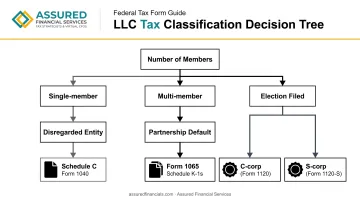
Match your classification to the right form:
| Classification | Federal Form |
|---|---|
| Single-member (disregarded) | Schedule C with Form 1040 |
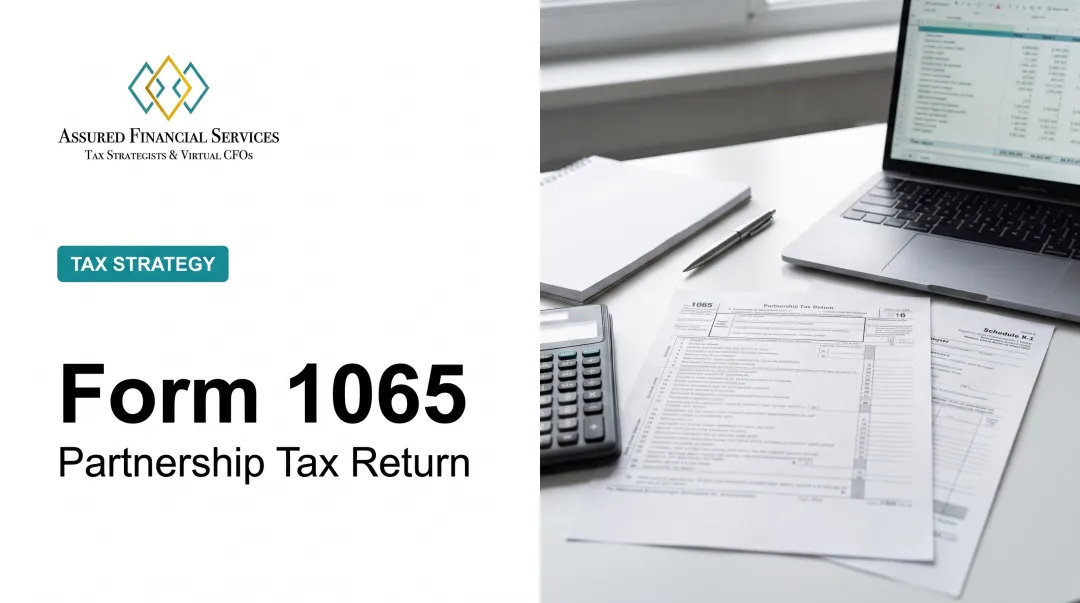
| Multi-member (partnership default) | Form 1065 with Schedule K-1s |
| C-corp election | Form 1120 |
| S-corp election | Form 1120-S |
Employment tax filings (Form 941 quarterly; Form 940 annually for FUTA) apply separately from your income tax classification. A disregarded LLC still counts as a separate entity for these purposes, so disregarded status doesn't erase your payroll filing duties.
Step 4: File State Returns, Pay Applicable Fees, and Track Deadlines
Many states require their own LLC filing, annual report, or franchise fee, completely independent of what you owe the IRS. California is a clear example. LLCs doing business there must file Form 568 with the state and pay an $800 annual tax, plus an income-based LLC fee from $900 to $11,790 based on California-sourced revenue.
Federal deadlines to know:
- March 15 (or nearest business day) for partnerships (Form 1065) and S-corps (Form 1120-S)
- April 15 for sole proprietors (Schedule C) and C-corps (Form 1120)
- Extensions via Form 7004 (business returns) or Form 4868 (individual returns) extend the filing deadline, not the payment deadline
Key Factors That Determine Your LLC's Tax Filing Requirements
Four variables shape which forms you file and how much you owe.
Factor 1: Number of LLC Members
This is the starting point. One member means default disregarded entity status and Schedule C. Two or more members means default partnership status and Form 1065. Adding or losing a member mid-year can trigger a classification change, so track membership changes closely.
Factor 2: Entity Classification Elections
Filing Form 8832 or Form 2553 overrides the default entirely. Once accepted, your LLC shifts into corporate or S-corp filing rules: different forms, different deadlines, and potential double-taxation exposure under a C-corp election that doesn't exist under default treatment.
Factor 3: State of Formation and Operation
Federal classification is only half the picture. States impose their own LLC-specific rules:
- Annual report requirements
- Flat franchise fees
- Income-based fee tiers (such as California's)
- Registration obligations in every state where you're "doing business," not just where you formed
Operating in multiple states often means multiple sets of these obligations stacking up.
Factor 4: Business Activity and Self-Employment Tax Exposure
LLC members taxed as partners generally owe self-employment tax on their share of earnings once net self-employment income hits $400. A limited partner may only owe it on guaranteed payments for services, depending on their status.
S-corp elections are sometimes pitched as a way to reduce this exposure. That is not automatic.
A shareholder-officer who performs services is still an employee, and the corporation must pay reasonable compensation as wages before treating remaining amounts as distributions. The IRS can and does reclassify distributions as wages when compensation looks artificially low.
Common Mistakes to Avoid When Filing Your LLC Tax Return
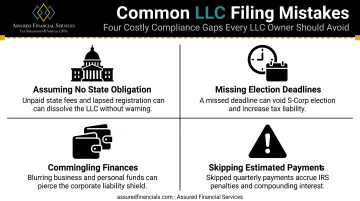
These four errors account for most of the costly LLC filing problems we see:
- Assuming no federal return means no state obligation. Many states charge their own annual LLC fee or require a separate filing regardless of your federal treatment.
- Missing election deadlines or lock-in windows. File Form 8832 or 2553 late, or outside the effective-date window, and you may be stuck with unwanted tax treatment for years.
- Commingling personal and business finances. Shared accounts distort income reporting and make clean bookkeeping nearly impossible at tax time.
- Skipping quarterly estimated payments. Members with pass-through income who skip quarterly payments often face unexpected underpayment penalties.
DIY Filing vs. Hiring a Tax Professional
Filing complexity climbs fast once you move past a straightforward single-member setup. Multiple members, multi-state operations, entity elections, or government contracting and cross-border activity each add layers that basic software wasn't built to handle.
DIY software works well when:
- You're a single-member LLC
- Your income is simple and entirely domestic
- You haven't made any entity classification elections
Professional guidance matters more when:
- You're a multi-member LLC weighing an S-corp election
- You operate across state lines
- You have government contracting (GovCon) exposure
- You have cross-border income or international reporting obligations
This is where a firm's approach matters as much as its credentials. Assured Financial Services is led by an IRS Enrolled Agent with unlimited practice rights before the IRS in all 50 states. The firm builds LLC tax planning around year-round strategy, not a once-a-year filing transaction.
That work covers quarterly estimated taxes, entity structure analysis, and planning around income timing, deductions, and retirement contributions—well before the deadline, not scrambled together after it.
The trade-off is straightforward: DIY software saves money upfront but carries real risk once your situation gets complicated. A missed election, misclassified worker, or overlooked state fee often costs far more than professional guidance would have.
Frequently Asked Questions
How is an LLC taxed in the USA?
The IRS taxes LLCs based on classification, not as a distinct entity type. Single-member LLCs report on Schedule C as disregarded entities. Multi-member LLCs default to partnership treatment on Form 1065 with K-1s. Either can elect corporate or S-corp treatment instead.
How do I file my California LLC taxes?
File the appropriate federal form based on your classification, plus California's Form 568 and the state's $800 annual LLC tax. Confirm current fee tiers and deadlines directly with the California Franchise Tax Board, since these figures are updated periodically.
What tax form does a single-member LLC file?
Single-member LLCs default to disregarded entity status. Most report business income and expenses on Schedule C, attached to the owner's personal Form 1040. Rental or farm activity may use Schedule E or F instead.
Do I need to file an LLC tax return if my LLC had no income?
Often, yes. Multi-member LLCs generally must file Form 1065 even with zero revenue, unless they had neither income nor deductible expenditures all year. State filings and annual fees frequently apply regardless of income level.
What happens if I don't file my LLC tax return on time?
You'll face late-filing penalties, accruing interest, and potentially a loss of good standing at the state level. Extensions are available if requested before the original deadline. An extension to file does not extend your deadline to pay.
Can an LLC file taxes as an S corporation?
Yes. An eligible LLC can elect S-corp treatment by filing Form 2553. Once accepted, the LLC files Form 1120-S instead of its default form, which can affect self-employment tax exposure depending on how compensation is structured.